
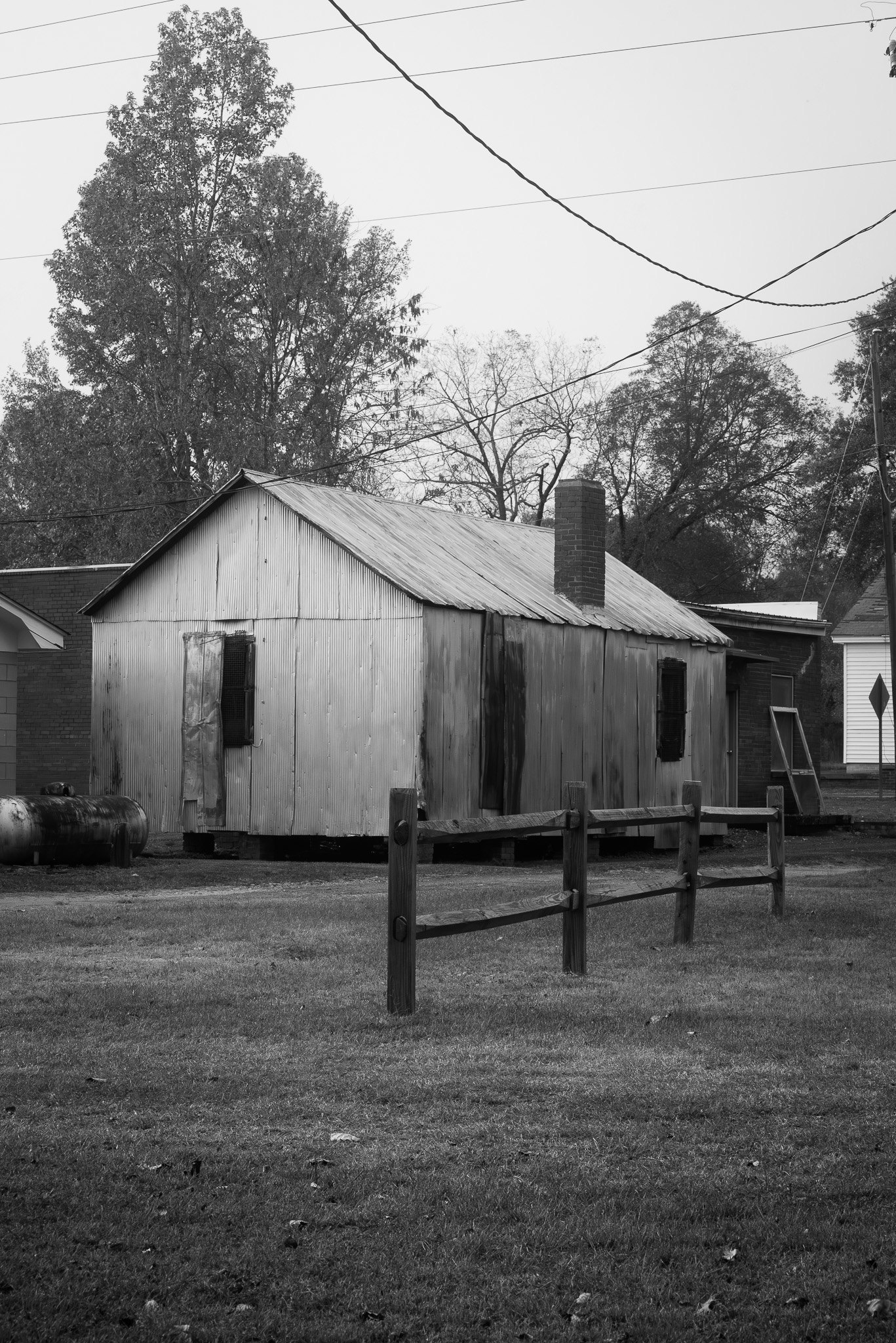
Pomaria doesn’t ask for much attention. It sits just off the highway, a single block of Main Street, easy to miss unless you’re already slowing down. Most of the buildings are quiet now — standing, intact, but clearly unused. This one sits behind the community food bank, across from the entrance to the Palmetto Trail, with no signs, no markings, and no obvious purpose left to announce.
I didn’t know what it was when I photographed it, and I still don’t. There was nothing to explain it — no plaque, no painted name, no visual clue beyond its shape and condition. It looked empty, like many of the structures nearby, holding its place without asking to be interpreted.
What drew me in wasn’t history so much as presence. The building felt settled into its surroundings, neither collapsing nor active, just existing in that quiet in-between state that shows up in a lot of small Southern towns. Main Street ends almost as soon as it begins. The road turns back toward the highway, and the town slips out of view just as easily as it came into it.
I chose to photograph it in black and white to strip away any sense of nostalgia or charm. Color would have softened it. Monochrome let the lines, surfaces, and light do the work — the way the structure held its ground without decoration or explanation. It wasn’t about documenting what the building used to be. It was about noticing what it is now.
Places like Pomaria are full of these quiet structures. They don’t tell stories outright. They don’t perform for the camera. They simply remain, carrying the weight of time without spectacle. That kind of stillness feels important to record, especially when everything else seems intent on moving past it.
Not every photograph needs a backstory. Sometimes the absence of information is the point.
If you’d like to explore more of my South Carolina fine art work, you can browse my Fine Art collection or reach out through my contact page.