
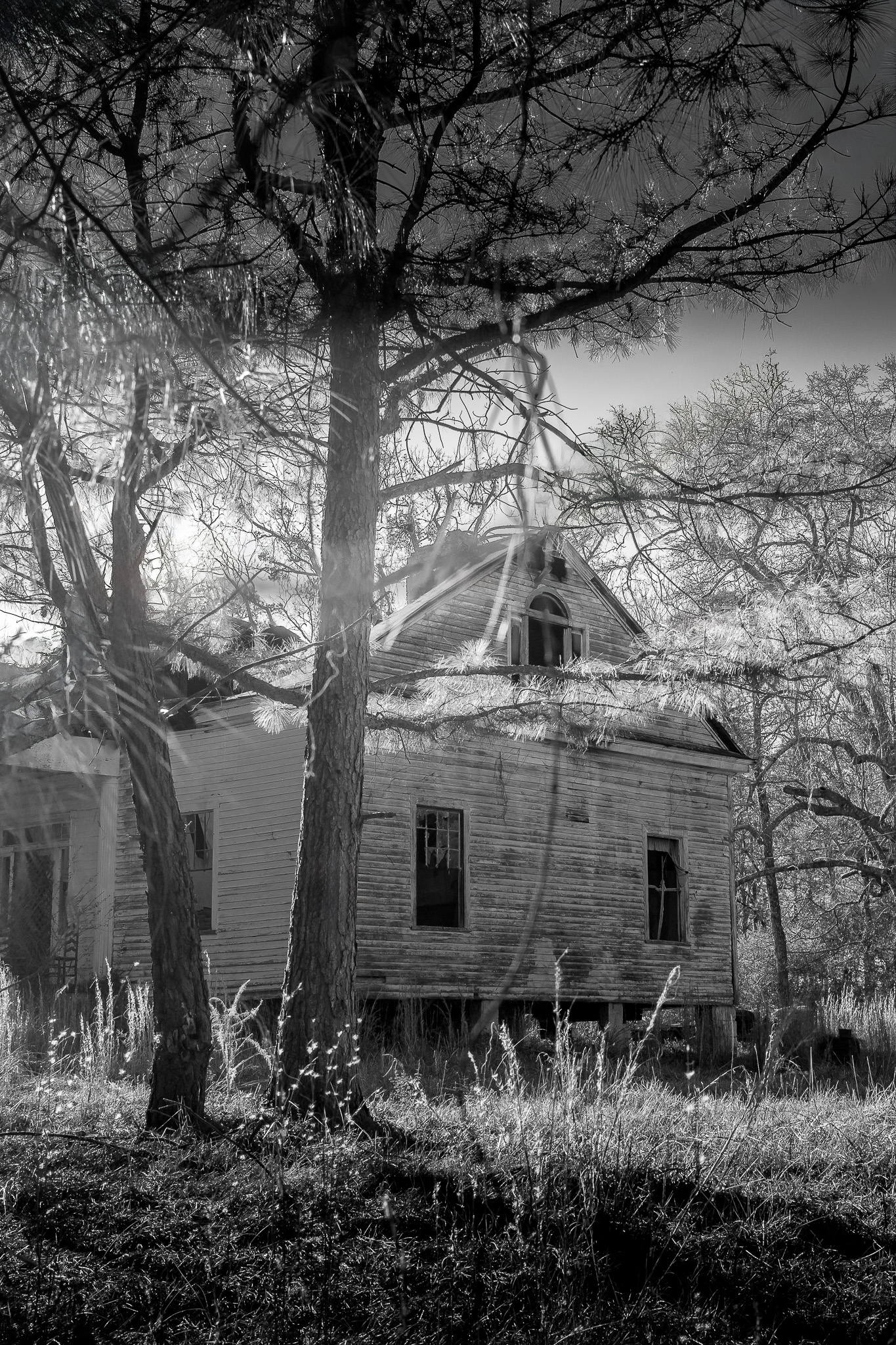
There’s a moment in every shoot where the gear stops being theoretical and starts arguing with reality.
I started this weekend on a 300mm, doing what that lens does best: isolating subjects, trimming away context, tightening the frame until only the essential remains. On paper, it made sense. I wanted separation. I wanted control. I wanted the subjects to stand on their own.
But the environment had other ideas.
In every location, I was physically too close for the 300mm to behave the way I needed it to. These weren’t distant subjects observed from across a field or street. I was inside the spaces, moving through them, responding to them. The longer focal length began to feel restrictive, compressing the scene in a way that stripped it of scale and proportion.
What I actually wanted was contradiction:
a sense of place and isolation.
context without clutter.
That’s where the switch happened.
I moved to the 35mm and everything settled immediately. The proportions snapped back into something that felt honest. The frame widened just enough to let the environment breathe, while still allowing the subjects to hold their ground. Instead of forcing separation with distance, I could isolate through framing, light, and shadow.

At the Japanese garden in Newberry, the bridge became less about the setting and more about balance. The reflection held because the perspective felt natural. Nothing was stretched or compressed into something theatrical. The scene stayed quiet.

Even the flower benefitted from restraint. A longer lens would have turned it into a specimen. The 35mm kept it grounded, isolated, yes, but still part of the place where it was growing.

The Martin Street Beer Parlor was the final confirmation. The signage, the symmetry, the flag, the street, all of it needed room to coexist. The wider field of view kept the photograph from tipping into nostalgia or caricature. It remained what it is: a place still doing its job, unconcerned with being romantic.
This wasn’t about choosing the “right” lens in a technical sense. It was about choosing the one that matched how I was experiencing the space.
Sometimes the most important technical decision isn’t how much you exclude. It’s how honestly you let the scene take up space.